
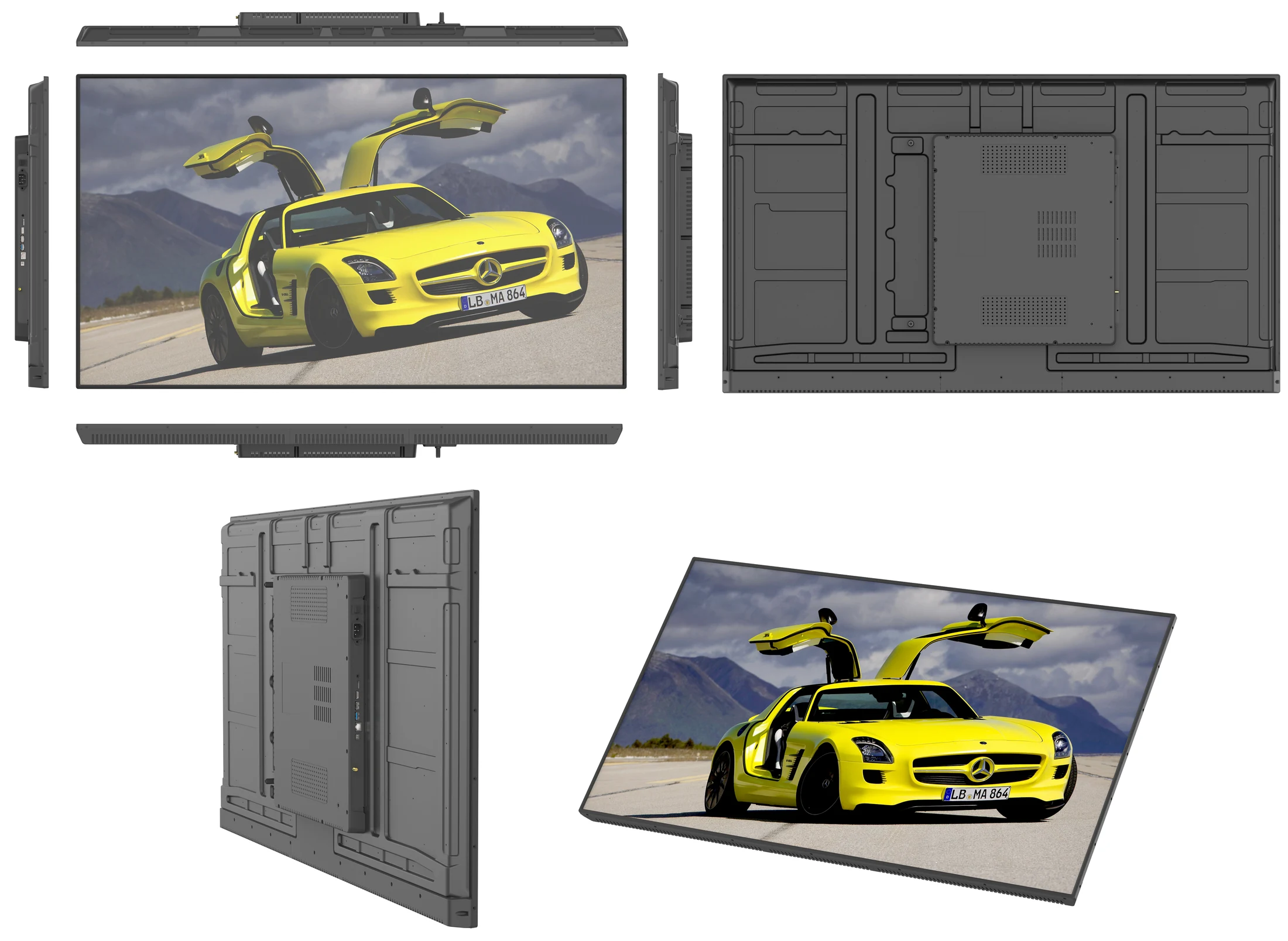
Decide the total image size first, then the number of panels, then the bezel. Buying panels first and working out the layout afterwards is how walls end up with a visible grid.
Decide the total image, then divide it
Start from the wall and the viewing distance, exactly as you would for a single screen. A wall read from four metres wants roughly 2.7 metres of image width for comfortable legibility of text; a wall read from ten metres wants considerably more.
Then divide that area into panels. A 3 x 3 arrangement of 55-inch panels gives a nominal 3.65 x 2.05 metre image; a 4 x 4 arrangement of the same panels gives 4.87 x 2.74 metres. The arithmetic is simple, but the bezels must be added back in.
The bezel arithmetic
The bezel is the frame around each panel, and it exists on every internal edge. For an n x m wall, the total bezel intrusion across the width is (n - 1) multiplied by twice the bezel width, because two bezels meet at each internal seam.
A 3 x 3 wall built from panels with a 3.5 mm bezel therefore loses 2 x 2 x 3.5 = 14 mm of image width to seams, and the same across the height. That is barely visible. The same wall built from consumer televisions with a 15 mm bezel loses 60 mm per axis, and the seams dominate the image.
For any wall where the content must read as one continuous picture, specify a commercial panel with a bezel of 3.5 mm or less, and 0.9 mm for premium installations.
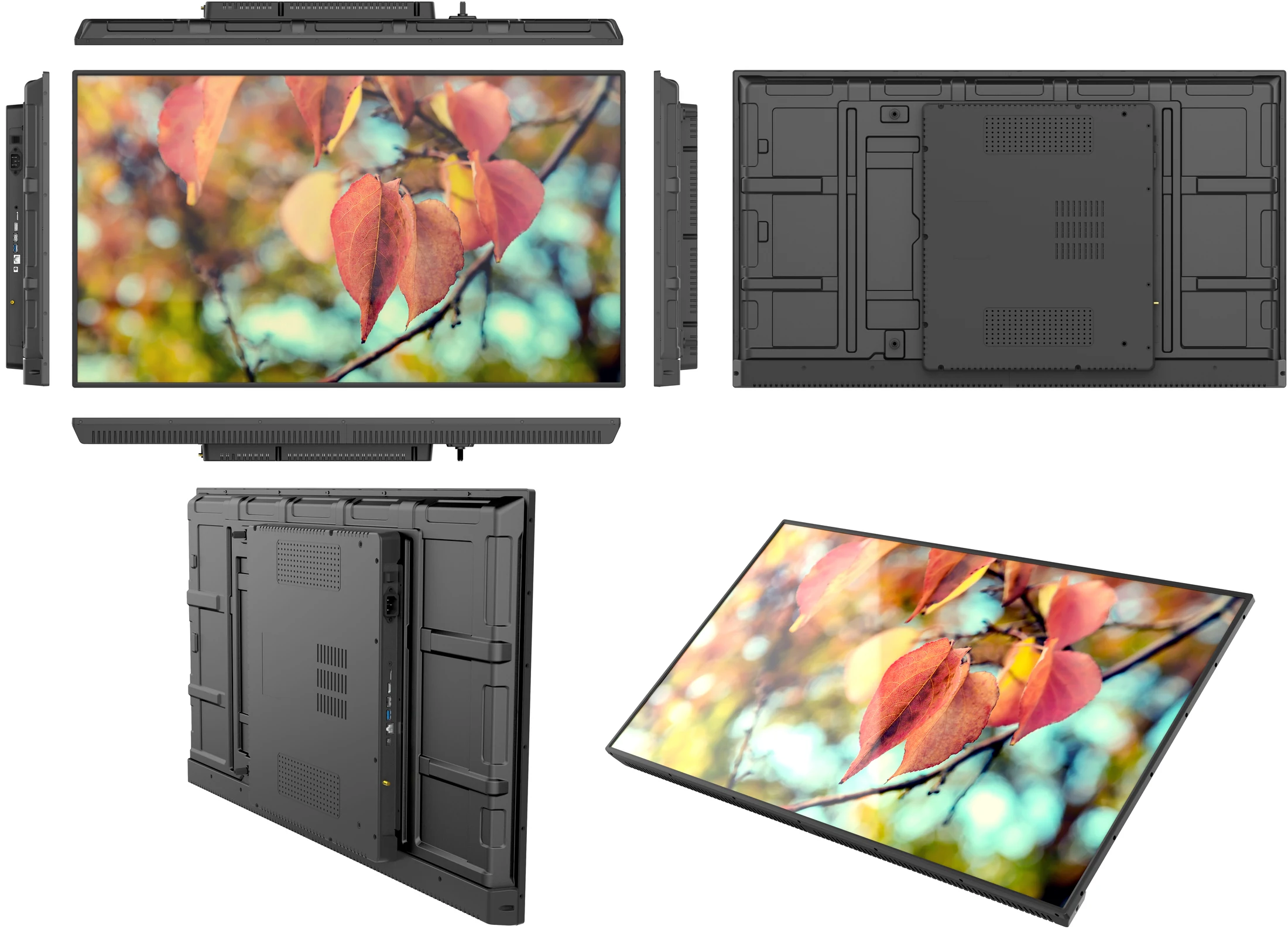
Panel size, orientation and the mount
Larger panels mean fewer seams but a coarser grid. A 2 x 2 wall of 86-inch panels has only one internal seam in each direction, which reads as almost seamless, but it is a very large installation and it is hard to align.
Landscape is the default; portrait is common for wayfinding and retail columns. The mount must be specified for the weight of the wall, the wall construction and the alignment method. A video wall that cannot be adjusted after installation will never be perfectly aligned.
Front-service mounts allow a panel to be released and pulled forward. They cost more but they turn a two-day repair into a two-hour one.
Ask us before you specify.
Send us the room, the location or the content you plan to run. Our engineers will review it and come back with a practical recommendation — there is no charge for the assessment.
What drives the image
A video wall needs a processor or a controller that can present the source across the whole wall as one logical canvas. Feeding each panel from a separate media player and hoping they stay in sync is a common and avoidable failure.
Confirm the number of simultaneous sources you need, whether you need windows and picture-in-picture, and whether the layout must change on a schedule. Those requirements decide whether you need a hardware wall controller, a software solution on a workstation, or a simple splitter for a single source.
Refresh, brightness matching and calibration
Panels in the same wall must match in brightness and colour, or the grid becomes visible even when the seams are not. Buy all the panels as one batch with the same panel revision, and have the wall calibrated after installation.
Ask the supplier how they will handle a panel replacement two years from now. If the panel is discontinued, a wall with unmatched brightness looks worse than a wall with a visible seam.
Content design for a grid
Content designed for a single screen usually looks wrong on a wall. Design for the grid: place important elements away from the internal seams, avoid thin horizontal lines that cross the whole wall, and use large type.
If the wall will display a single video image, the seams are less noticeable when the image is bold and the movement is continuous. If the wall displays a dashboard, place one widget per panel so that each panel is a legitimate unit of the layout.
A commissioning checklist
Confirm the wall can carry the load. Confirm the power and network count. Confirm the controller can drive the required resolution. Confirm the alignment method and the tolerance. Confirm the calibration process and who performs it. Confirm the spare-panel policy.
Our team can review a wall layout and check the bezel arithmetic, the mounting loads and the controller requirements before you commit to an order. Send the wall dimensions and the intended content to our contact page and we will come back with a marked-up layout.
Questions buyers ask us
These are the questions our engineers answer most often about this topic. If yours is not here, send it to us and we will answer it directly.
What bezel width makes a video wall look seamless?
3.5 mm or less reads as almost seamless at normal viewing distance, and 0.9 mm is the premium option. Consumer televisions with 15 mm bezels produce a visible grid and should not be used for a continuous image.
How many panels do we need?
Decide the total image width and height first, then divide by the panel size and add the bezel intrusion back in. A 3 x 3 wall of 55-inch panels gives roughly a 3.65 x 2.05 metre image.
Can one media player drive the whole wall?
It can, provided the player and the wall controller support the combined resolution and can present the sources as one canvas. Feeding each panel from its own player is the most common cause of synchronisation problems.
What happens when a panel needs replacing?
Confirm the spare-panel policy before you order. If the panel is discontinued, a wall with unmatched brightness looks worse than one with a visible seam, so buy a spare at the same time as the wall.
Check your video wall layout
Send us the wall dimensions and the content you plan to display. We will verify the bezel arithmetic, controller and mounting requirements.