
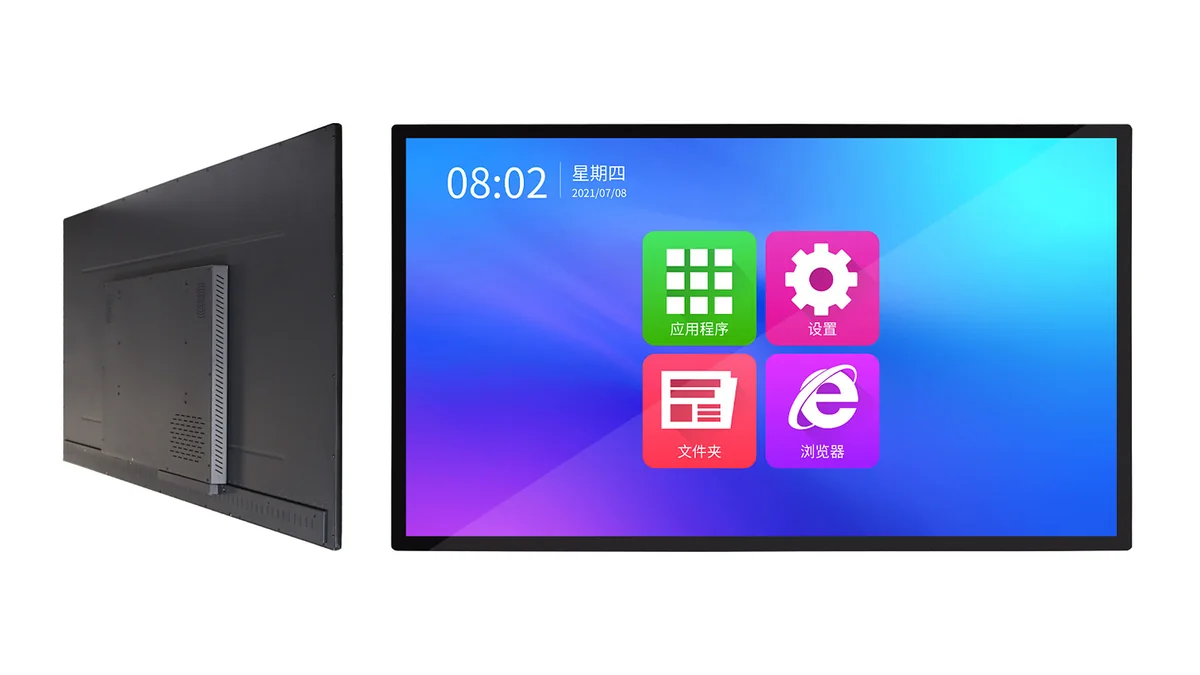
Wall-mounted wins on aesthetics, floor-standing wins on flexibility, shelf-edge wins on proximity. Most retail projects end up using all three.
Wall-mounted displays
A wall-mounted screen is the most space-efficient option and usually the cheapest to buy, because the enclosure is only a bracket. It keeps the floor clear, which matters in corridors, airports and retail aisles.
The trade-off is installation and service. You need a suitable wall, a cable route inside the wall or in trunking, and a mounting height that works for the audience. Retrofitting power and data into a finished wall is where the cost lives, not in the bracket.
Service access is the specification most often forgotten. If the panel is hard against the wall, replacing a power supply means taking the screen down. Specify an articulated or pop-out bracket for any location where a lift is not available.
Floor-standing totems
A floor-standing unit is a complete product: enclosure, screen, media player, power distribution and often speakers. It can be positioned by one or two people, moved when the layout changes, and serviced through a lockable rear door without any wall work.
That flexibility is why retail, hotels and transport operators prefer totems even though the unit price is higher. When the marketing plan changes, the screen moves. When a component fails, the engineer opens the back door.
The main constraints are floor loading and stability. A tall totem on a lightweight mezzanine or a temporary floor needs a base plate and, in public areas, an anti-tip specification. Our TSA floor-standing range covers single-sided and double-sided totems from 32 to 85 inches.
Shelf-edge and small-format displays
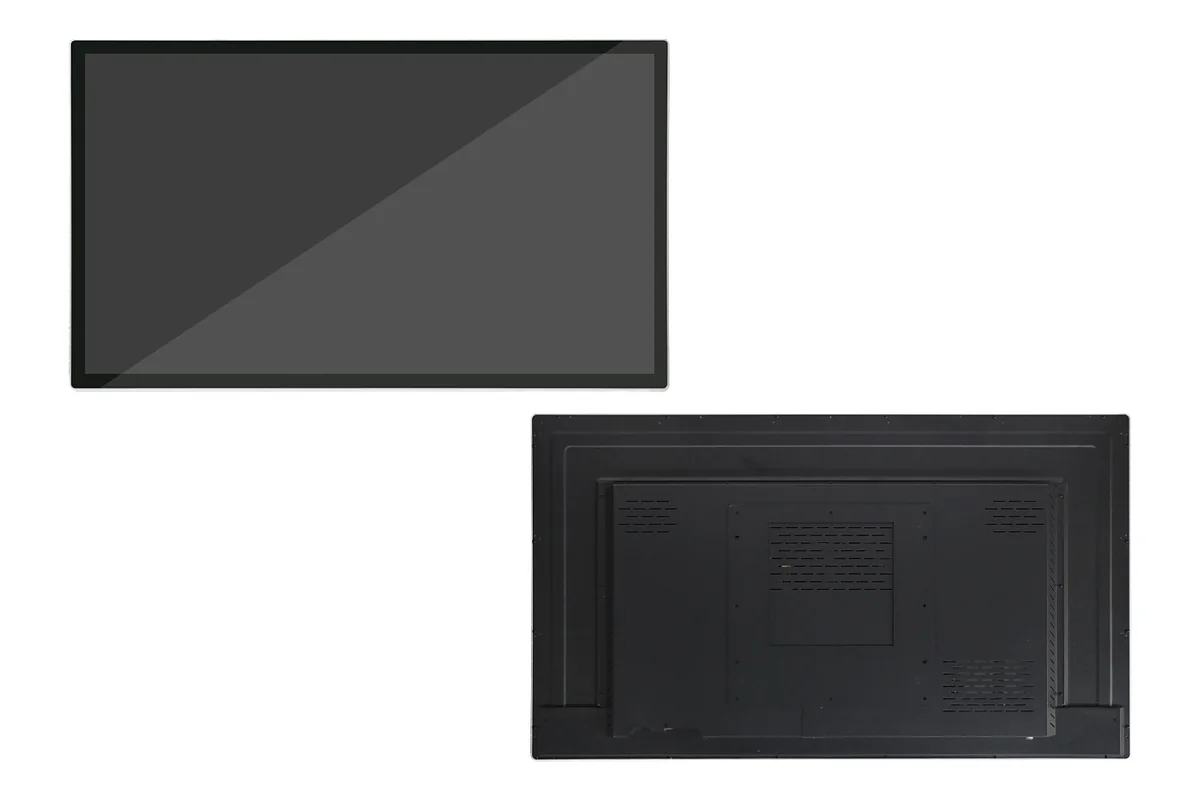
Small screens at the point of decision work differently from large ones. A 21.5 to 32-inch display beside the product is read from one to two metres, so resolution and colour accuracy matter more than brightness or size.
These units are usually powered over a single cable and mounted on a shelf bracket or a short stand. Plan the power distribution first, because a row of shelf displays with individual adapters is an unreliable and untidy installation.
Ask us before you specify.
Send us the room, the location or the content you plan to run. Our engineers will review it and come back with a practical recommendation — there is no charge for the assessment.
Visibility, sightlines and mounting height
The centre of the screen should sit at roughly eye level for a standing adult, around 1.5 to 1.6 metres. That is higher than most people expect when they first mark a wall, and it matters because a screen mounted at seated eye level is read poorly by people standing.
Check the sightline from the primary approach direction, not just straight on. A wall-mounted screen that is perfectly visible from the front of a shop can be invisible to a customer walking along the window.
Installation and cabling
Floor-standing units need a power outlet and, ideally, a network point within reach of the unit. If the location will change, consider a single trailing cable with a floor box rather than a fixed connection.
Wall-mounted units benefit from a recessed media box behind the screen, so the player, the power supplies and the network switch are all inside the cavity and can be reached when the screen swings out.
Which format for which venue
Retail windows and entrances usually want a wall-mounted screen behind the glass or a totem just inside. Hotel lobbies and receptions suit a totem or a double-sided unit that can be seen from two directions. Transport and healthcare environments favour wall-mounted screens in protected positions where the cable route can be planned during construction.
Promotional and seasonal campaigns are the clearest case for totems, because the content changes far more often than the location, and the unit can be moved to where the traffic is.
Comparison summary
Choose wall-mounted when the location is fixed, the wall can be prepared and aesthetics matter most. Choose floor-standing when the location may change, when the unit must be serviced without disrupting the building, or when you want a complete product delivered ready to run. Choose shelf-edge when the decision happens in front of the product rather than across the room.
If you are fitting out several sites, send us the floor plans and we will mark up which format suits each position. Our full product catalogue lists the available enclosures by size and orientation.
Perguntas que os compradores nos fazem
These are the questions our engineers answer most often about this topic. If yours is not here, send it to us and we will answer it directly.
Which is more cost-effective for a retail rollout?
Wall-mounted panels are cheaper per unit but need a prepared wall, a cable route and a bracket. Floor-standing totems cost more to buy yet install in minutes and can be moved. For leased premises, totems are frequently the cheaper total cost.
How high should a wall-mounted screen be?
Centre the screen at about 1.5 to 1.6 metres from the floor for a standing adult. Screens mounted at seated eye level look correct on a drawing and read badly in practice.
Can a floor-standing totem go outdoors?
Only if it is an outdoor-rated enclosure with the correct ingress protection and thermal design. An indoor totem placed outside will fail on condensation and heat within a season.
What service access should we insist on?
Insist on a lockable door or a front-release mount that lets an engineer reach the player, power supply and cabling without removing the screen from the wall. Specify it before you sign, not after the first fault.
Planning a multi-site rollout?
Send us the floor plans and we will mark up which signage format suits each position, with the cabling and service access noted.